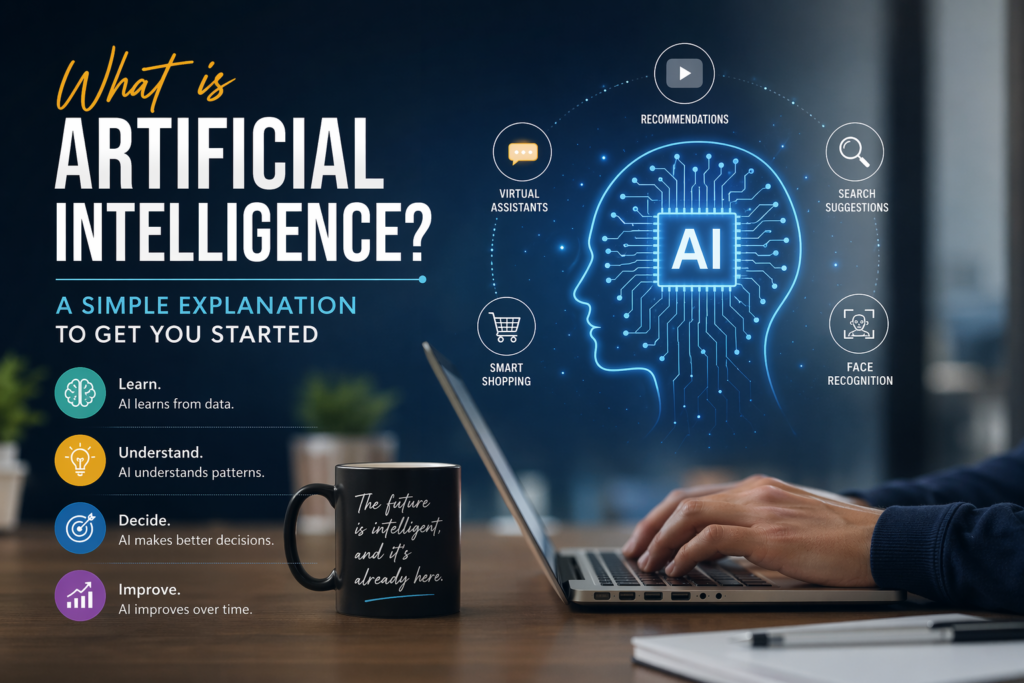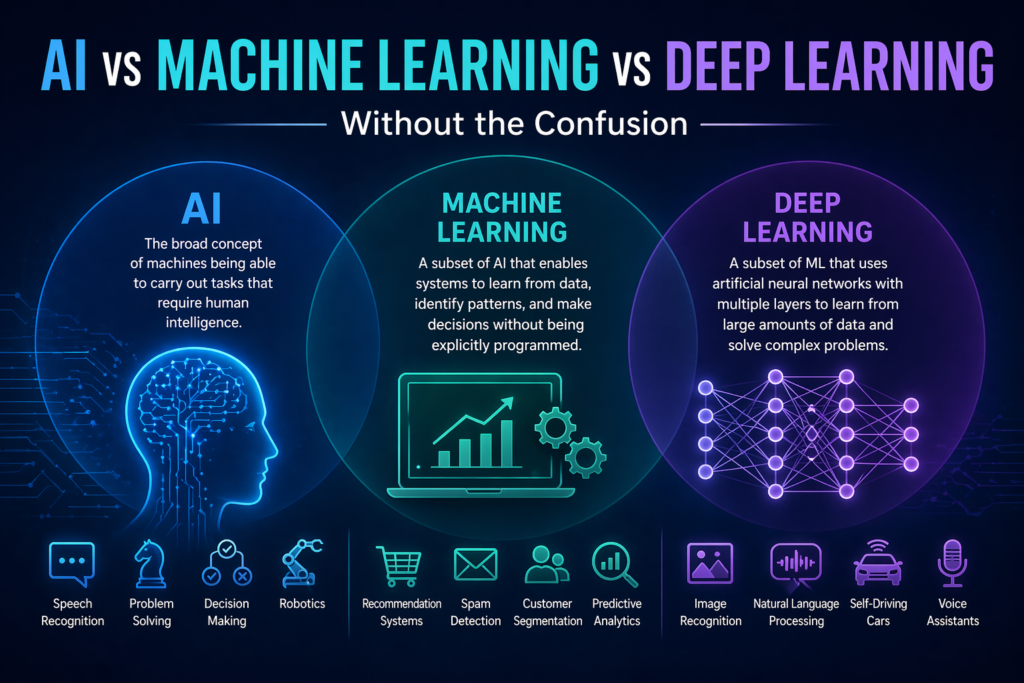
Artificial Intelligence (AI) is no longer just a buzzword or a futuristic concept. it is shaping the way we live, work, and interact every day. From voice assistants on our smartphones to intelligent automation in enterprises, AI has evolved dramatically over the last few decades. But how did we get here? Let’s take a journey through the evolution of AI and understand its past, present, and future.
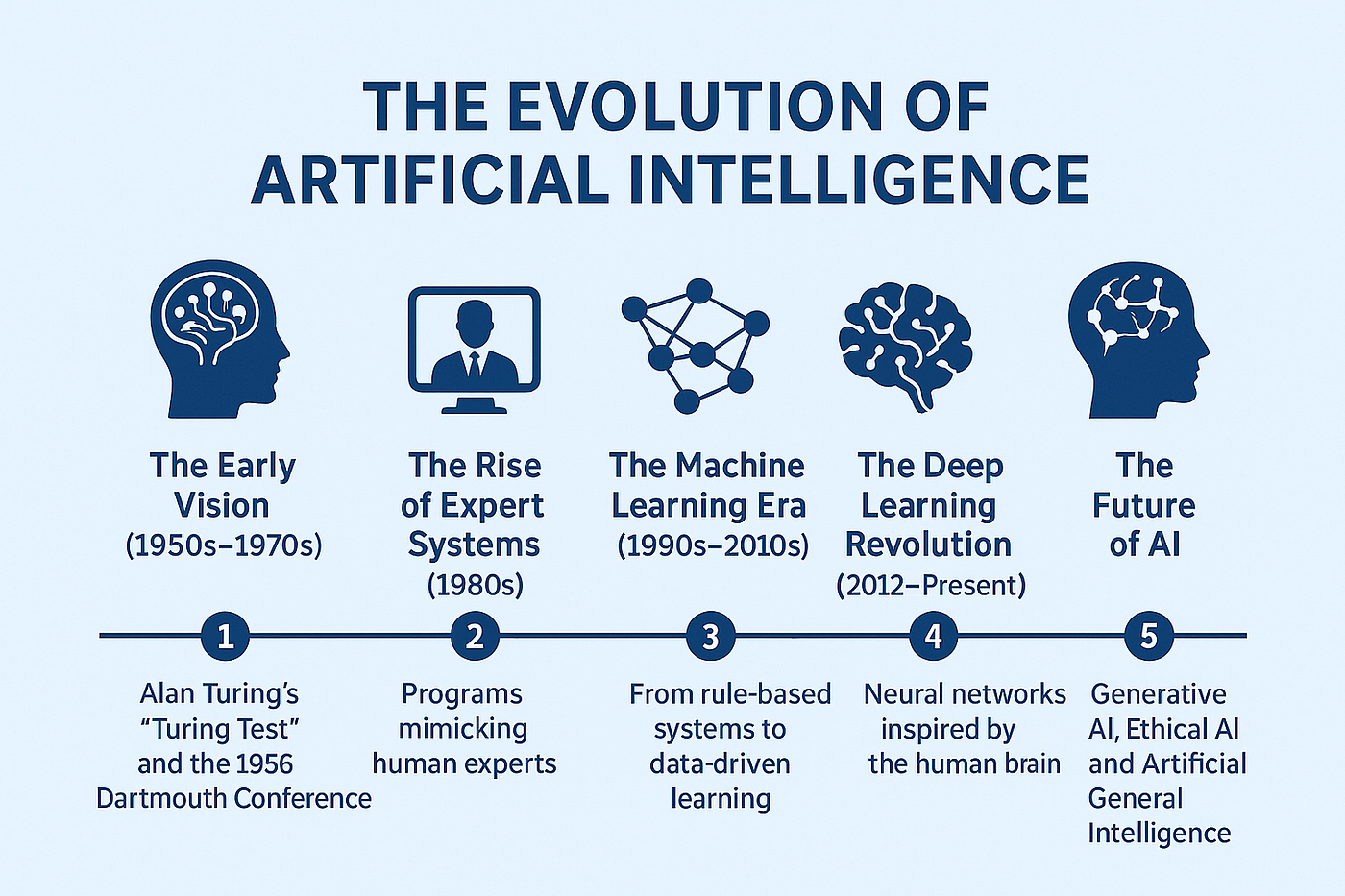
1. The Early Vision (1950s — 1970s)
The idea of creating machines that could “think” like humans began long before we had the technology to make it real.
- Alan Turing, in his famous 1950 paper, proposed the “Turing Test” to evaluate a machine’s ability to exhibit intelligent behavior.
- In the 1956 Dartmouth Conference, the term Artificial Intelligence was officially coined, marking the birth of AI as a research field.
- Early AI systems focused on symbolic reasoning and problem-solving, leading to programs that could play chess or solve logic puzzles.
However, due to limited computing power and data, progress was slow, leading to what we now call the first AI winter.
2. The Rise of Expert Systems (1980s)
In the 1980s, AI research shifted towards expert systems programs designed to mimic the decision-making of human experts.
- These systems were widely used in medicine, engineering, and business.
- A famous example is MYCIN, an expert system for diagnosing infections.
This was the first time AI started to see commercial applications, though the technology was still constrained by expensive hardware and limited adaptability.
3. The Machine Learning Era (1990s — 2010s)
The explosion of computing power and availability of digital data gave rise to Machine Learning (ML) a shift from rule-based systems to algorithms that could learn from data.
- 1997: IBM’s Deep Blue defeated world chess champion Garry Kasparov, proving machines could surpass human intelligence in specific tasks.
- 2000s: Growth of the internet produced massive amounts of data, fueling ML algorithms like decision trees, support vector machines, and later, neural networks.
- 2011: IBM’s Watson won Jeopardy! by processing natural language at scale, highlighting AI’s ability to understand and respond to human queries.
4. The Deep Learning Revolution (2012 — Present)
The real breakthrough came with Deep Learning, powered by advanced neural networks inspired by the human brain.
- 2012: A deep neural network trained on ImageNet achieved record-breaking accuracy in image recognition, igniting a new wave of AI research.
- AI became embedded in daily life through voice assistants like Siri, Alexa, and Google Assistant, autonomous vehicles, and real-time translation tools.
- Companies like Google, Amazon, and OpenAI invested heavily in AI research, making it accessible to businesses and consumers worldwide.
Generative AI (like ChatGPT, DALL·E, and MidJourney) now creates text, images, and even music — pushing the boundaries of creativity.
This period marked the beginning of AI in everyday applications — from email spam filters to recommendation engines on e-commerce platforms.
5. The Future of AI: Where Are We Heading?
As we look ahead, AI’s evolution is just beginning. Emerging trends include:
- Generative AI for business and creativity — transforming industries from education to design.
- Ethical AI — addressing concerns of bias, transparency, and responsible use.
- AI in healthcare — from drug discovery to personalized treatment plans.
- Artificial General Intelligence (AGI) — the ambitious goal of creating machines that can perform any intellectual task humans can.
While challenges remain, AI’s journey shows us that it is not here to replace humans but to augment our capabilities and redefine possibilities.
Conclusion
From its humble beginnings as an academic concept to becoming a transformative force in every industry, AI’s evolution has been nothing short of extraordinary. The pace of innovation suggests that the next decade will bring even more groundbreaking advancements. One thing is certain: AI is not just shaping the future. it is the future.