Not long ago, I was having a casual conversation with someone who asked me a very honest question:
“Is AI something only engineers and data scientists need to learn?”
It made me pause for a moment.
Because if I go a few years back, even while working closely with enterprise platforms, cloud systems, and large scale applications, AI always felt like something slightly distant something advanced, almost reserved for specialists. It wasn’t something everyone needed to understand.
But that has changed. Quite rapidly.
Today, AI is no longer a niche topic. It’s becoming a part of how everyday systems work, how businesses operate, and even how we make small decisions in our daily lives. And the interesting part is you might already be using AI more than you realize.
So, what exactly is Artificial Intelligence?
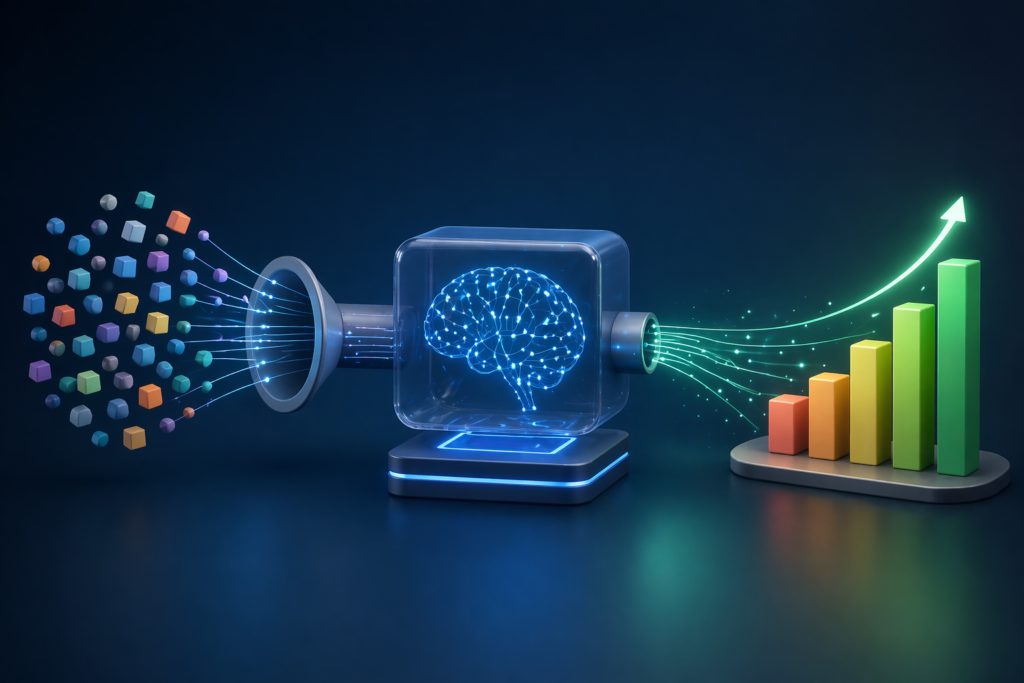
At its core, Artificial Intelligence is about building systems that can learn from data, understand patterns, and make decisions in a way that mimics certain aspects of human thinking.
Now, that doesn’t mean machines are “thinking” like humans with emotions or consciousness. It simply means they are trained to process information and improve their responses over time.
A simple way to think about it is this:
If a system can take input, learn from it, and give better output the next time it is using AI in some form.
That’s really the foundation. Everything else you hear machine learning, deep learning, models comes on top of this basic idea.
AI is already part of your daily life
One of the biggest misconceptions I see is that people think AI is futuristic. Something that’s coming.
In reality, it’s already here and quietly working in the background.
When Netflix recommends a show that you actually end up liking, that’s AI.
When Google starts completing your sentence before you finish typing, that’s AI.
Even when your phone recognizes your face instantly to unlock, AI is playing its role.
These systems are constantly learning from user behavior. The more they are used, the better they become at predicting what you might want next.
And from my experience working with large scale systems, this shift from static systems to learning systems is one of the most significant changes in technology today.
Why AI matters more than ever
Earlier, most applications and systems were designed to follow instructions. You give an input, and you get a fixed output. Everything was predictable.
But now, expectations have changed.
Businesses want systems that don’t just respond they want systems that can anticipate, suggest, and even optimize decisions.
For example, instead of just showing reports, companies now want insights. Instead of reacting to problems, they want systems that can predict them.
This is where AI becomes powerful.
In many of the projects and environments I’ve worked in, I’ve seen this transition firsthand. The conversation is no longer just about building software it’s about building smarter systems.
Do you really need to learn AI?
This is where most people feel overwhelmed.
There’s a common assumption that learning AI means diving into heavy coding, complex mathematics, or advanced algorithms. And while those are certainly part of the deeper side of AI, that’s not where you need to start.
In fact, I would argue the opposite.
Start by understanding the concepts. Get comfortable with how AI is used in real life. Observe how it’s already influencing the tools you use every day.
Once that foundation is clear, everything else becomes much easier to pick up.
That’s one of the reasons I started writing about AI to break it down into something practical and approachable, especially for people who are curious but don’t come from a deep technical background.
Final thoughts
AI is not about machines replacing humans. It’s about machines helping humans make better decisions, faster.
And the sooner you become familiar with how it works, the more confident you’ll feel navigating this changing landscape.
You don’t need to master everything at once. Just start by understanding.
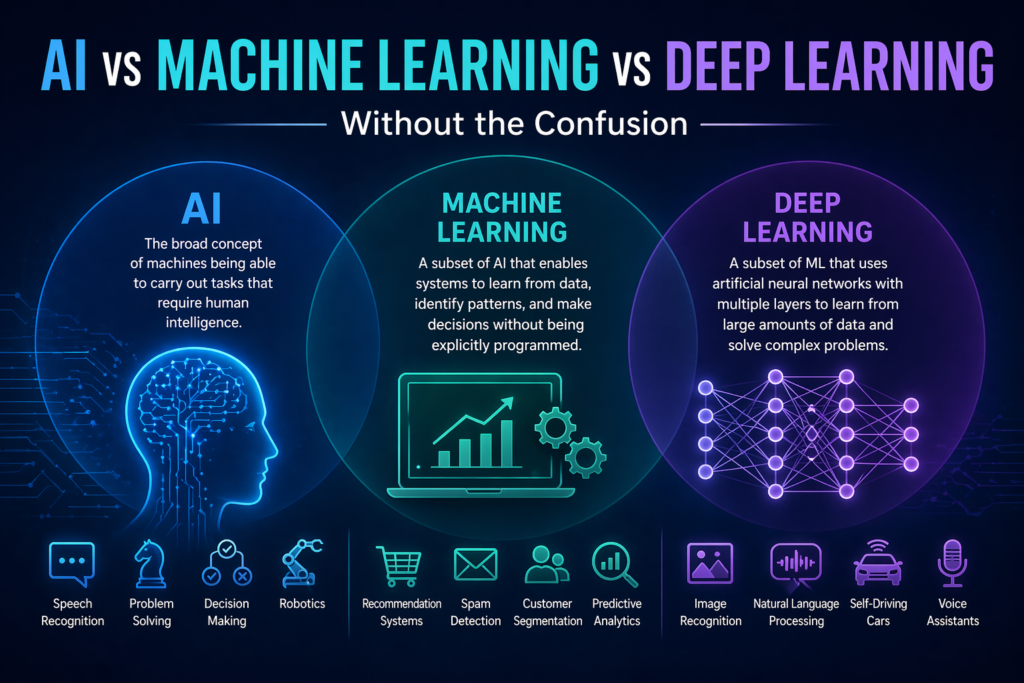
In the next blog, I’ll walk through the difference between AI, Machine Learning, and Deep Learning without making it complicated.